Wire Rope Sling vs Chain Sling: A Buyer's Guide
Choose a wire rope sling for light, long, or angled lifts with high strength-to-weight. Choose a chain sling for heavy, abrasive, or short lifts where corrosion resistance and durability matter more than weight savings.
- Wire rope slings offer a higher strength-to-weight ratio and better angle performance than chain slings.
- Chain slings handle abrasive, corrosive, and impact loads better, with simpler inspection and replacement.
- Match sling type to load weight, sling angle, environment, and inspection frequency.
- Always verify working load limit, attachment hardware, and condition before each lift.
Which sling type suits your lifting operation?
Rigging decisions start with the load. A wire rope sling and a chain sling solve different problems. Wire rope slings are lighter and perform better at higher angles. Chain slings are heavier but resist abrasion and corrosion better. The right choice depends on load weight, sling angle, environment, inspection requirements, and how often the sling will be reused.
Buyers should not view one sling as universally better than the other. The correct choice is the one that fits the actual lift. A light, long lift with a high angle may favor wire rope. A heavy, short lift in a wet or abrasive environment may favor chain. Consider the specific geometry of the lift. A crane operator lifting a long pipe bundle over a crowded yard faces different constraints than a warehouse crew hoisting a palletized unit. The physical reality of the site dictates the material selection.
Strength, weight, and sling angle
Wire rope slings are made from steel wire strands wrapped around a core. The structure gives a high strength-to-weight ratio. A wire rope sling can be significantly lighter than a chain sling of similar working load. For crane operators, that weight reduction matters. It reduces the effective load on the hook and makes the sling easier to handle during rigging.
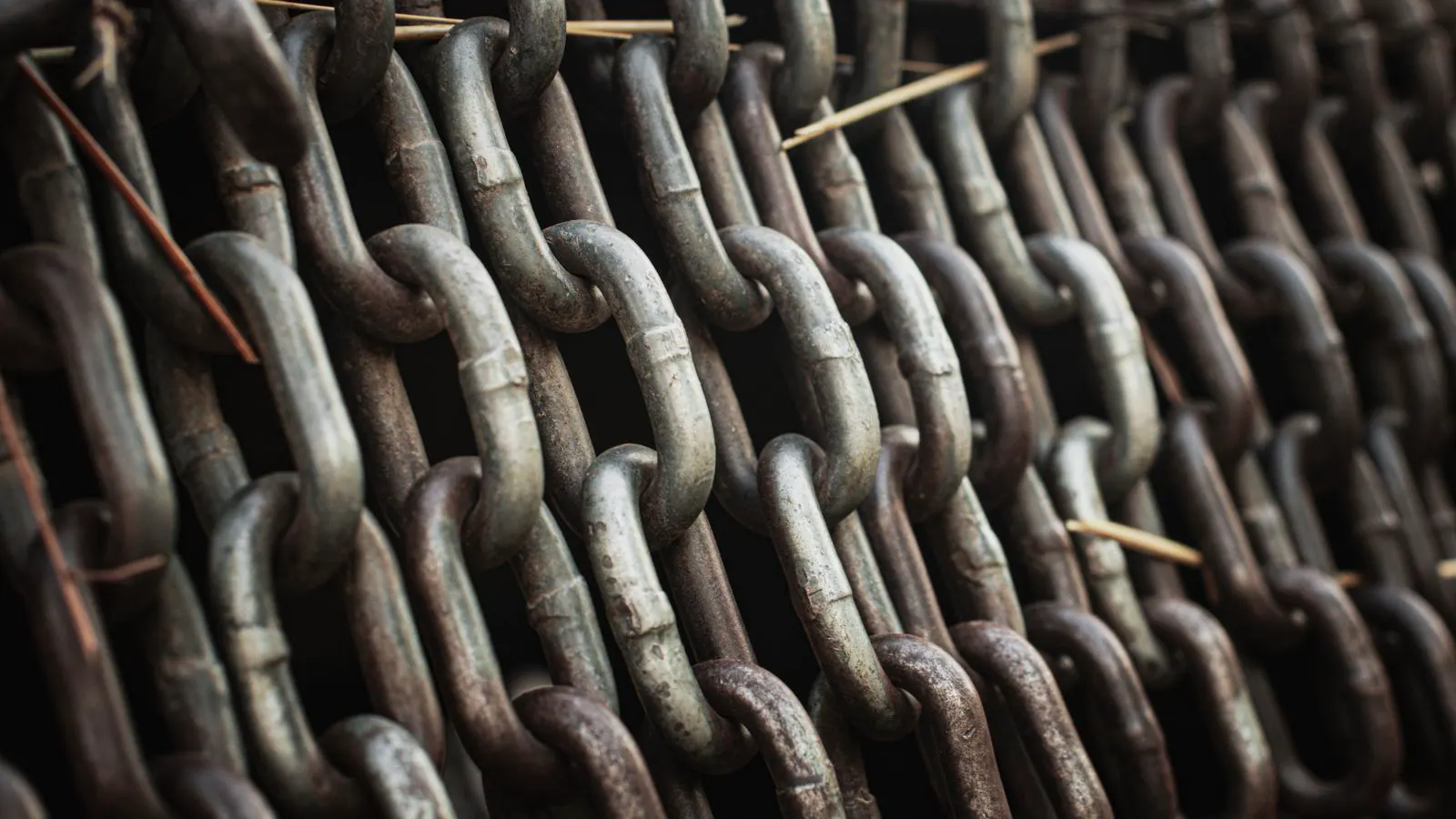
Chain slings are made from forged or rolled steel links. They are heavier for the same working load. The extra mass can matter when the sling is part of the total lifted load, especially for long lifts or high-capacity cranes.
Sling angle changes the effective load on the sling. Both sling types lose capacity as the angle increases. Wire rope slings generally maintain a higher effective capacity at the same angle because of their lighter mass and flexible construction. Chain slings can also perform well at moderate angles, but their weight adds to the load on the hook.
Consider a practical example to illustrate the weight impact. A wire rope sling of a certain length might weigh a few kilograms. A chain sling of the same length might weigh ten times as much. If the crane is operating near its rated capacity, that difference consumes part of the available capacity. In a 90-degree vertical lift, the sling weight is simply added to the load. In an angled lift, the tension in the sling increases, and the vertical component of that tension pushes down on the hook. The lighter the sling, the less extra load is added to the hook, leaving more margin for the actual cargo.
Sling angle is a geometric variable that directly affects tension. A 90-degree angle means the load hangs straight down. The tension in the sling equals the weight of the load plus the weight of the sling. As the angle opens up, the tension rises. At 60 degrees, the tension in each leg of a two-sling rigging configuration increases significantly. At 45 degrees, the tension doubles. At 30 degrees, the tension quadruples. This physics applies to both wire rope and chain, but it affects them differently because of their mass.
Wire rope slings are flexible. They can conform to the shape of the load more easily than chain. This flexibility allows for better load distribution when the cargo is irregular. Chain slings are stiffer. They can bridge gaps but do not conform as naturally. In some applications, this stiffness is a benefit. It keeps the load stable. In others, it is a drawback. It can create point loads on fragile cargo.
Durability and inspection
Chain slings are easier to inspect visually. Each link can be checked for elongation, deformation, or cracking. A damaged link can often be removed or the sling retired. Wire rope slings are more complex to inspect. Wires can break internally, and the outer strands may hide damage. Wire rope slings usually require more skilled inspection and more frequent replacement.
Chain slings are more resistant to abrasion and impact. They handle contact with sharp edges, rough surfaces, and repeated dragging better than wire rope. Wire rope slings are more vulnerable to kinking, crushing, and wire breakage. If the sling will rub against a beam, edge, or load surface, chain is usually the safer default.
Inspection of wire rope slings is a technical task. It requires looking for broken wires, worn cores, corrosion, and deformation. It often involves tools and specific standards. A single broken wire can compromise the entire sling. Because the damage can be internal, visual inspection alone is often not sufficient. Tensile testing or ultrasonic inspection may be needed for critical applications, though these are less common for standard shop use.
Chain sling inspection is more straightforward. You look at the links. You check for wear at the joints. You look for stretch. You check for cracks. If a link is worn beyond limits, the sling is out of service. The labor required to inspect a chain sling is lower. A trained operator can check a chain sling quickly. A wire rope sling requires more time and expertise. This difference in inspection effort is a major factor in total cost of ownership.
If a sling will rub against a beam, edge, or load surface, chain is usually the safer default. Wire rope slings can be protected with sleeves or padding, but this adds cost and complexity. It also reduces the effective strength of the sling if not done correctly. Chain slings are inherently tougher. They can take more abuse without immediate failure.
Environment and material considerations
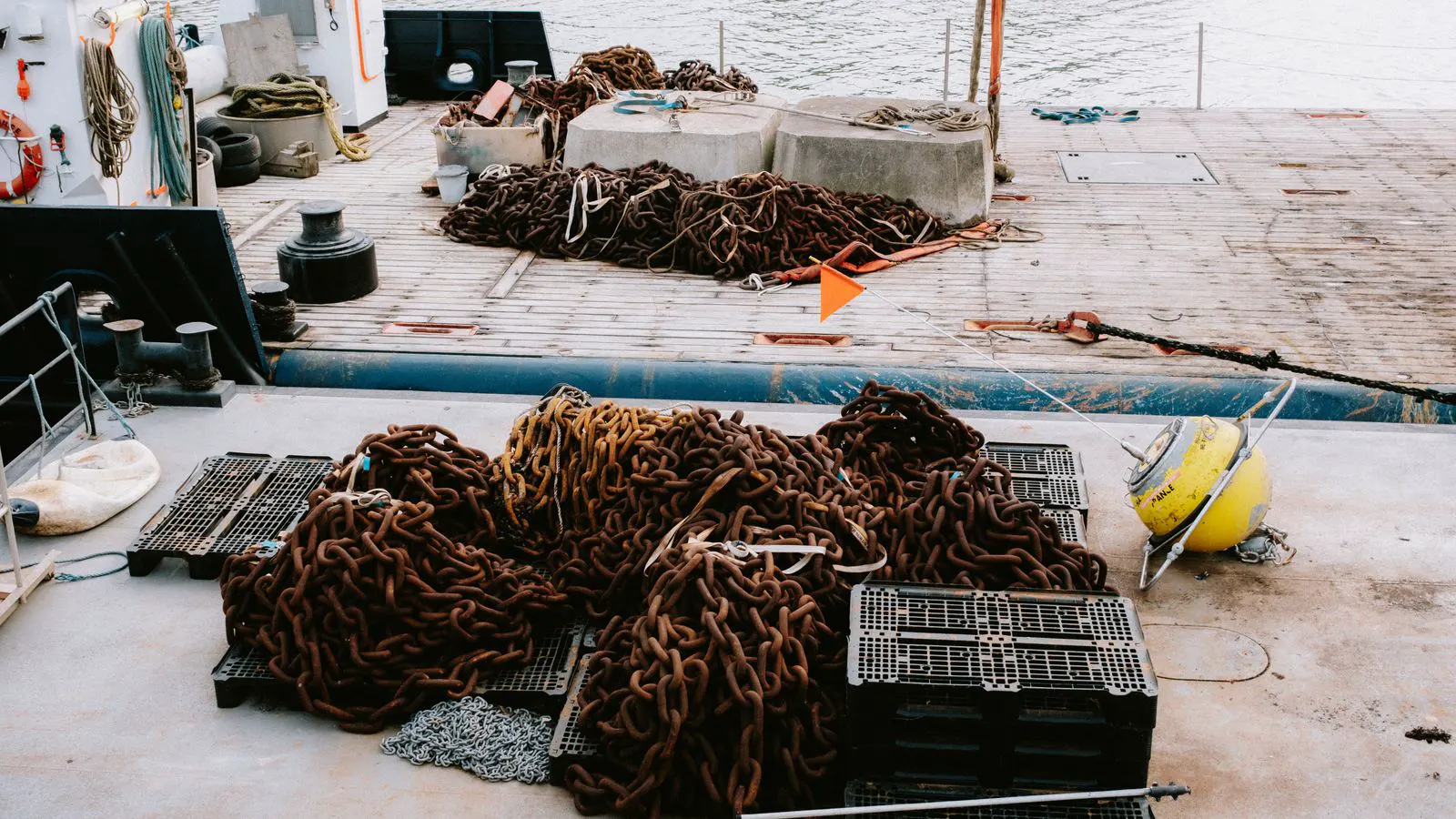
Corrosion changes the decision. Chain slings are often coated for corrosion resistance. Wire rope slings can also be coated, but the coating can be damaged during handling. In wet, marine, chemical, or high-humidity environments, chain slings often last longer with less maintenance.
Heat and radiation can affect both types. Wire rope slings may lose strength at high temperatures. Chain slings also have temperature limits. The selection should match the operating temperature range of the lift.
For abrasive loads, chain slings usually outperform wire rope. For clean, dry, or low-contact environments, wire rope slings may last as long or longer, depending on the load and handling.
Consider a marine environment. Salt air and water are harsh on steel. Wire rope slings can corrode from the inside out. The coating may protect the outer wires, but once it is breached, the core is exposed. Chain slings can be coated with zinc or other protective layers. They are also easier to rinse and inspect for early signs of rust. In a chemical plant, the environment may be corrosive in a different way. Acidic or basic vapors can attack wire rope faster than some chain coatings. The specific chemistry of the site must be evaluated.
Heat is another factor. If the load is hot, such as molten metal or freshly painted goods, the sling will heat up. Wire rope slings have temperature limits. Above certain temperatures, the steel loses strength. Chain slings also have limits, but they are often higher or more predictable. The selection must account for the temperature of the load and the ambient air.
Abrasion is a key differentiator. In a foundry, a mill, or a yard, slings may drag against concrete, steel, or rough edges. Wire rope slings can kink or break under these conditions. Chain slings can be dented or stretched, but they are more likely to survive the contact. The choice here is often driven by the physical environment.
Cost and lifecycle
Upfront cost is only part of the decision. Chain slings often have a higher purchase price per meter than wire rope slings of similar strength. Wire rope slings may cost more for complex terminations, attachments, or custom lengths.
Lifecycle cost depends on replacement frequency, inspection labor, and downtime. Chain slings may cost more to buy but less to inspect. Wire rope slings may cost less to buy but more to inspect and replace. A buyer should estimate total cost over the expected service life, not just the invoice price.
Consider the inspection labor. A crew inspecting a wire rope sling may spend twice as long as they do inspecting a chain sling of similar length. That time has a cost. If the wire rope sling requires replacement every year and the chain sling every three years, the chain sling wins on lifecycle cost, even with a higher upfront price.
Replacement frequency is a major driver. Wire rope slings are often considered consumables. They are replaced regularly. Chain slings are more durable. They can be repaired, provided the damage is localized. A single bad link in a long chain sling can sometimes be replaced, depending on the standard and the application. This repairability adds to the lifecycle value of chain slings.
Downtime is a hidden cost. If a sling fails, the lift stops. The crane is idle. The crew is waiting. A wire rope sling that fails due to hidden internal damage can be catastrophic. A chain sling that fails usually shows warning signs, such as wear or deformation, before the final break. This predictability reduces the risk of sudden failure.
Criteria table for choosing
| Criterion | What to look for | Why it matters |
| Wire rope sling strength-to-weight | Lighter mass for the same working load | Reduces total load on the crane and hook |
| Sling angle performance | Higher effective capacity at elevated angles | Allows safer angled lifts without excessive load increase |
| Abrasion resistance | Chain sling preferred for rough or sharp contact | Prevents premature wire or link damage |
| Corrosion resistance | Coated chain or wire rope for wet or chemical environments | Extends service life and reduces replacement frequency |
| Inspection ease | Chain links are easier to check visually | Lowers inspection time and reduces missed defects |
| Handling and storage | Wire rope slings are lighter and easier to store | Improves crew efficiency and reduces fatigue |
| Attachment hardware | Match shackle, hook, or eye to sling type and load | Prevents failure at the connection point |
Practical selection checklist
- Confirm the load weight and center of gravity.
- Measure the lift height and required sling length.
- Estimate the maximum working angle.
- Identify the environment: dry, wet, abrasive, corrosive, or hot.
- Check the inspection program and crew skill level.
- Compare the working load limit at the planned angle, not only at 90 degrees.
- Verify shackle and hook compatibility.
- Review storage and handling conditions to prevent damage before use.
This checklist is a starting point. It forces the buyer to think about the specific lift. It prevents the assumption that one sling type fits all scenarios. The center of gravity is critical. If the load is unbalanced, the sling angle may be greater than expected. The sling length must be sufficient to reach the load without straining. The angle must be calculated based on the geometry of the lift.
The environment check is often overlooked. A buyer might choose wire rope because it is lighter, but ignore the fact that the lift will take place in a rain-soaked yard. The inspection program check is also important. If the crew is not trained to inspect wire rope slings, the risk of missed defects is high. In that case, chain slings might be the safer choice, even if wire rope is cheaper.
Common mistakes to avoid
Buyers often choose a sling based only on the rated working load at 90 degrees. That number is not the whole story. The angle, sling length, and attachment method change the effective load. A sling that is rated for a heavy load at 90 degrees may be overloaded at 60 degrees.
Another mistake is ignoring the environment. A wire rope sling in a clean shop may perform well. The same sling in a wet, abrasive, or chemical environment may fail earlier. Chain slings are often the safer choice when the environment is harsh.
A third mistake is treating inspection as a formality. Both sling types need checks before use. Chain slings need link checks. Wire rope slings need wire checks, termination checks, and core checks. If the inspection standard is not met, the sling should not be used.
A fourth mistake is underestimating the sling weight. Buyers often calculate the load and forget to add the sling weight. In a high-capacity lift, the sling weight is a small fraction. In a low-capacity lift, it can be significant. If the crane is operating near its limit, the sling weight can push it over the edge.
A fifth mistake is not matching the hardware. A sling is only as good as its connection points. A shackle must be rated for the load. A hook must be compatible with the sling eye. A mismatch can lead to failure at the connection point, even if the sling itself is strong.
Final decision checklist
Use this checklist before placing an order.
- Load weight is known and verified.
- Sling angle is planned and calculated.
- Environment is classified for corrosion, abrasion, and temperature.
- Inspection frequency matches the sling type.
- Attachment hardware is compatible and rated.
- Replacement cost is included in the budget.
- Crew training covers inspection and safe handling.
- The chosen sling type matches the lift profile, not just the load number.
This final checklist brings together all the factors. It ensures that the decision is based on the actual lift, not on assumptions or defaults. The load weight must be verified. The angle must be calculated. The environment must be classified. The inspection program must be in place. The hardware must be compatible. The budget must include replacement costs. The crew must be trained.
The last item is the most important. The chosen sling type must match the lift profile. It is not just about the load number. It is about the entire context of the lift. A wire rope sling is not always the answer. A chain sling is not always the answer. The answer is the one that fits the specific lift.
Wire rope sling versus chain sling, in plain terms
If the lift is light, long, or angled, and the environment is controlled, a wire rope sling is usually the better fit. If the lift is heavy, short, abrasive, or corrosive, a chain sling is usually the better fit. The choice is not about which sling is stronger in a vacuum. It is about which sling survives the actual lift with the lowest risk and lowest lifecycle cost.
In a clean, dry warehouse, a wire rope sling is often the preferred choice. It is light, easy to handle, and performs well at angles. The environment is controlled. The inspection can be done by trained staff. The cost is lower over the life of the sling.
In a marine terminal, a chain sling is often the better choice. The environment is wet and corrosive. The sling may drag against rough surfaces. The inspection is easier. The sling lasts longer with less maintenance. The higher upfront cost is offset by the longer service life.
In a foundry, a chain sling is usually the choice. The environment is hot and abrasive. The load is heavy. The sling must withstand impact and heat. Wire rope slings are more vulnerable to these conditions. Chain slings are more robust.
The decision is not about which sling is stronger. It is about which sling is right for the job. The job includes the load, the angle, the environment, and the inspection requirements. By considering all these factors, buyers can make a smarter choice. They can reduce risk, lower costs, and improve safety.
Frequently asked questions
Which sling is stronger, wire rope or chain?
Both can be rated for the same working load. The rated capacity is set by the manufacturer, not the material alone. The practical difference is that wire rope slings are lighter and often perform better at higher angles.
Can I use a wire rope sling in a wet environment?
Yes, if the sling is designed and maintained for that environment. However, chain slings are often more practical in wet or corrosive conditions because they are easier to inspect and replace.
How often should I inspect a chain sling?
Inspect it before each use. More frequent formal inspections are needed if the sling shows wear, damage, or if the environment is harsh.
How often should I inspect a wire rope sling?
Inspect it before each use. Wire rope slings usually require more detailed inspection because hidden wire damage is possible. Follow the manufacturer and site standards.
Can I mix wire rope and chain slings on the same lift?
Yes, if the rigging is designed for it and the combined load is within the rated capacities. The attachments and angles must be checked as a system, not as separate pieces.